Activities Working Group Cabling
All about the sessions held at: Rittal, Lapp Benelux, Royal Duyvis Wiener, Niedax, Phoenix Contact, FrieslandCampina DMV, Heineken, Robert Bosch Packaging Technology, and Gouda Holland.
Sessions
In January 2014, SafeFoodFactory, together with EHEDG Netherlands, held a Hygienic Cabling workshop at the ROVC (Royal Dutch Institute for Public Health and the Environment). Participants shared questions, problems, and practical solutions. At the end of the workshop, it became clear that a clear and effective solution was still lacking and that many issues remained. Therefore, a call was made for a National Working Group to develop practical solutions and incorporate them into a new standard.
The working group made a total of 12 working visits to food companies, machine builders, and manufacturers of protective cables, cable trays, cabling, and connectors. Reports from the working visits are included below.
Rittal
On March 12, 2014, the National Working Group was established and its launch took place at Rittal in Zevenaar. Rittal, a trendsetter in the market, has years of expertise in the food industry, among other sectors, and has long provided suitable solutions for enclosures and energy-efficient cooling solutions.
During this session, the general outline was outlined and the initial scope of the project was determined. Objectives were also discussed, such as the publication of a Practical Guideline that will be presented at the "Return Day."
Lapp Benelux
The second session was held on April 23, 2014, at LAPP Benelux, a major player and expert in cabling, among other fields. With specialized solutions for the food industry, for example, LAPP offers a compelling package for the sector.
Writing a Practical Guideline also means examining current regulations and legislation. Where necessary, consultations with other bodies are also needed to determine whether this should still be the case. Therefore, it is important to also consider the expertise that the working group members can contribute.
The interesting LAPP session also provided the working group with insight into current regulations and legislation regarding EMC, cable color coding, and lifespan. One point raised during the session was that cable selection is an important decision that requires careful consideration.
ATEX was also discussed. An insightful presentation by Synamic, which has extensive experience with projects in ATEX environments in the food industry, among others, highlighted the importance of proper zoning and taking this into account during the design phase.
Royal Duyvis Wiener
The third session took place in the cocoa region of the world: Amsterdam and the surrounding area. At Royal Duyvis Wiener, participants gained valuable insight into the cocoa world and their perspective on cleanability. It is clear that there are many different segments within the food industry, each with a different risk level regarding contamination and cleaning methods. With its 127 years of experience, Royal Duyvis Wiener is a major player in the cocoa world, possessing extensive knowledge and expertise in this specific market.
FrieslandCampina concluded the meeting with a session on how FrieslandCampina approaches standardization and its necessity. Practical examples quickly demonstrated the desirability of reducing cabling and the crucial importance of standardization, a fact underscored by the design of these Practical Guidelines.
Following this, the National Working Group visited Jopen Bier in Haarlem. Jopen Bier produces prestigious specialty beers, and due to a very large new building, visitors were given the opportunity to tour the facility. This highlighted the importance of informing the entire supply chain about hygienic cabling practices.
Niedax Germany
On June 17, the National Working Group visited Niedax in Germany. This giant in cable support systems, which recently included Gouda Holland, is a major player in the market and offers various solutions. With their market-focus and attentive ear, they can quickly respond to market demands and provide suitable solutions, including for the food industry.
After a fascinating discussion session on cable support systems, refreshing ideas were generated, with particular attention paid to how such systems should be mounted. Here too, the cleaning method (dry, wet, or controlled wet cleaning) is a key aspect in choosing the right solution.
Phoenix Contact
Phoenix Contact invited the National Working Group to Germany on July 9th to discuss wireless and hygienic connectors with experts. Phoenix Contact also plays a significant role in the food industry, and with the hygienic M12 connector, they are unleashing a true revolution in connection technology.
The presentation by Anamet, a leading supplier of conduit solutions, demonstrated that reducing cabling is also possible in a simple way. This can be achieved by combining multiple cables into a single cable, which is much easier to clean. This is also an ideal solution for mechanical engineering applications involving energy chains. Important issues included color, cleanability of the conduit, and risk of damage. These topics, including maintenance, were discussed in detail, and conduit offers an excellent solution for effectively and quickly reducing the number of cables.
FrieslandCampina DMV
On August 28th, the session was held at FrieslandCampina DMV in Veghel. The working group also reviewed a recently completed project there. It became clear that careful attention must always be paid to the execution during construction to prevent deviations from the specifications.
Heineken
On October 7th, the working group visited Heineken. The participants examined how complex cabling is installed and discussed any weaknesses and how improvements could be made. They also considered cabling in various hygiene-required zones and the risk of disasters.
Rittal
On October 8th and 9th, the working group visited Rittal, among other places, to visit two Rittal factories in Germany, including a stainless steel factory where Hygienic Design enclosures are manufactured. During this session, there was ample opportunity to discuss the preliminary findings in the guideline with other companies active in the food industry.
Gouda Holland
What's the point of writing a Practical Guideline without practical application?!
On October 17th, the National Working Group visited Gouda Holland in Haastrecht for a practical day.
During this day, various cable support systems were used to install and clean cables.
It quickly became clear that the tools used to cut the cable ties are important. The razor-sharp edges of cable ties are inconvenient for cleaners because they can cut their hands. Fibers are also pulled from the wipes, posing a risk of contamination from the wipe itself.
Because the entire supply chain is represented in the Working Group, this session was an eye-opener for everyone. It yielded some very surprising preliminary conclusions regarding cable installation methods, cable support systems, and the construction of these solutions.
Robert Bosch Packaging Technology
On November 5, 2014, the National Working Group visited Robert Bosch Packaging Technology in Weert. During the highly engaging tour and introductory video presentation, it became clear that Bosch is more than just another player in the packaging industry. Bosch has a long history and a compelling corporate philosophy, enshrined in a foundation. As a global market leader, Bosch is a decisive factor in its industry, as evidenced by the latest design of the SVC machine. Bosch is also participating in this working group to share its expertise and elevate cleanability to an even higher level.
It's important to consider what can be omitted in terms of cabling; it shouldn't be too complex, and it shouldn't be limited to electrical components, but also to pneumatics.
During this session, the practical session at Gouda Holland was reviewed, and the findings were re-evaluated and discussed.
NIEDAX
On December 9th, the National Working Group visited Niedax in Wijchen. Niedax recently added Gouda Holland, providing the market with an even more robust and comprehensive solutions portfolio.
During this session, the latest developments in the field of the NPR Functional Maintenance (NPR) were also discussed. Because when you talk about cabling, you're also talking about cabling where functional maintenance is important. Consider, for example, cabling to and from a fire alarm control panel in a factory.
In addition, the draft guideline was discussed and reviewed in more detail during the meeting, meaning it's starting to take shape.
Coding and labeling of cables in the field was also discussed, which also deserves attention and will be included in the working group's scope.
Gouda Holland — Test Day
On January 22, 2015, the time had finally come: the working group was not only responsible for theoretical foundations but also for hands-on testing in practice.
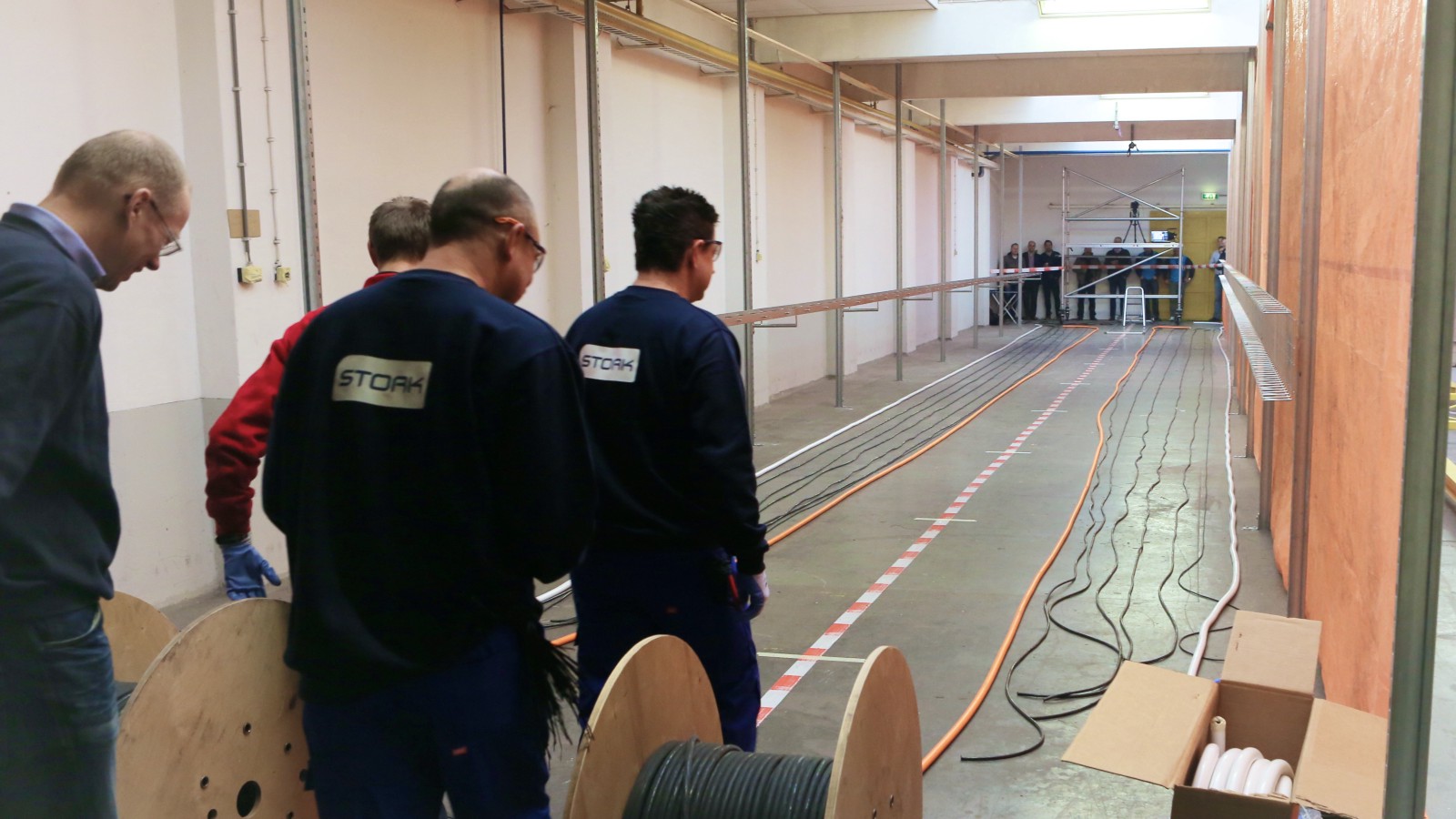
For testing, Gouda Holland installed a test setup consisting of a 2 x 25-meter cable support system. All working group members contributed to a fantastic test day, supplying highly experienced technicians from Stork, conduits/protective hoses from Anamet, cables from Lapp, HD enclosures from Rittal, highly experienced cleaners from HAGO, and, of course, mayonnaise and cocoa powder for cleaning the systems.
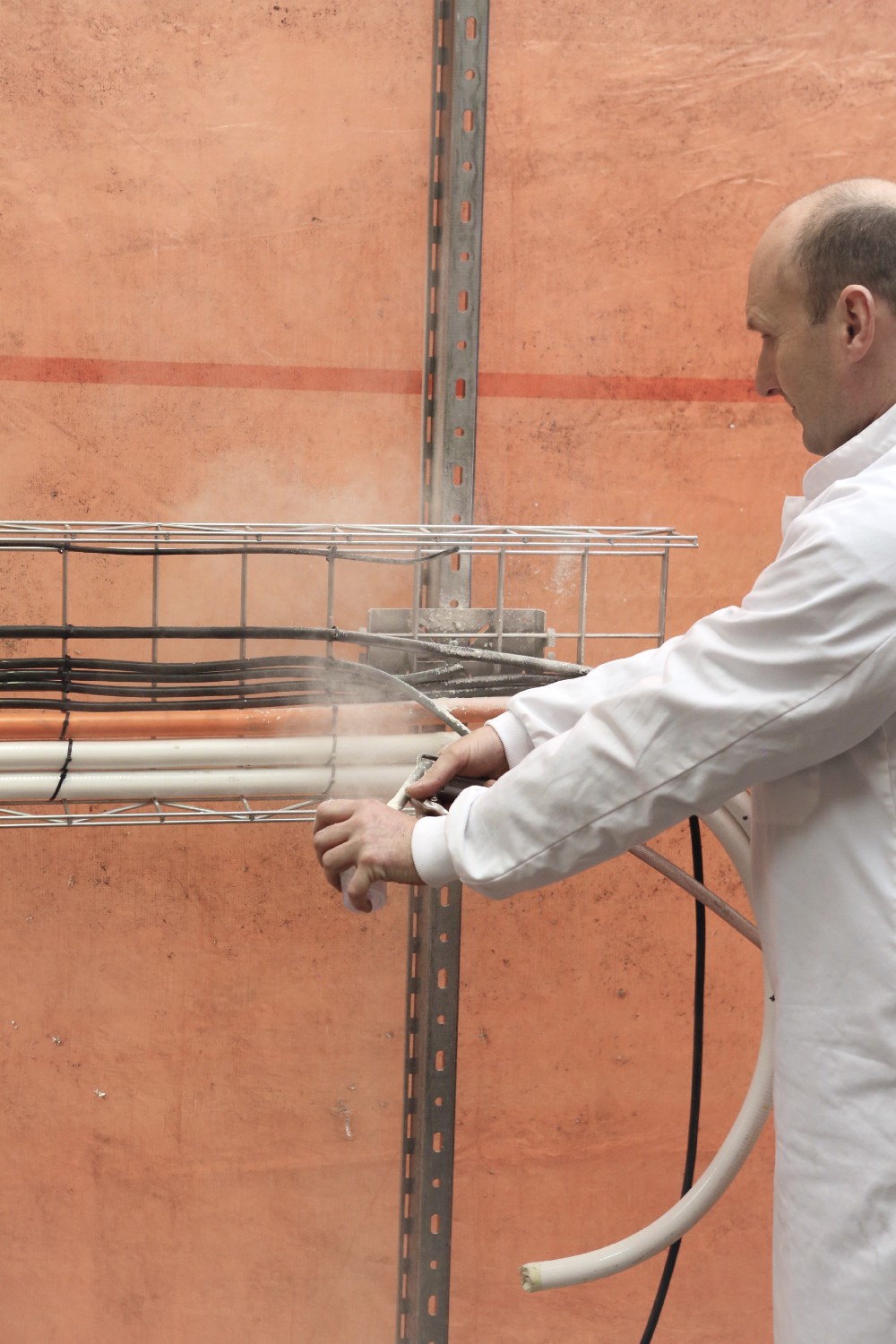
The working group is also grateful to Hypred and Blateq for providing cleaning agents and a unique new cleaning method, respectively, which allowed the test to be carried out perfectly.
"Measuring is Knowing"
A well-known phrase. Therefore, a professional film crew filmed the installation of cabling on a traditional system (vertically mounted) and a completely new cable support system.
The results of these tests were astonishing! Looking at the consumption of cable ties on a cable support system of just 25 meters, the count was already approaching 1,000. On one side were the highly experienced Stork technicians with the traditional system (as still used in many installations today), and on the other side were the less experienced working group members from FrieslandCampina and Van Lente. Besides installing various cables, maintenance was also considered. What happens when you need to replace a cable?
Then it was time for the highly skilled cleaning experts from HAGO. Using various cleaning techniques, they also examined dry, controlled wet, and wet cleaning, with, once again, astonishing results…
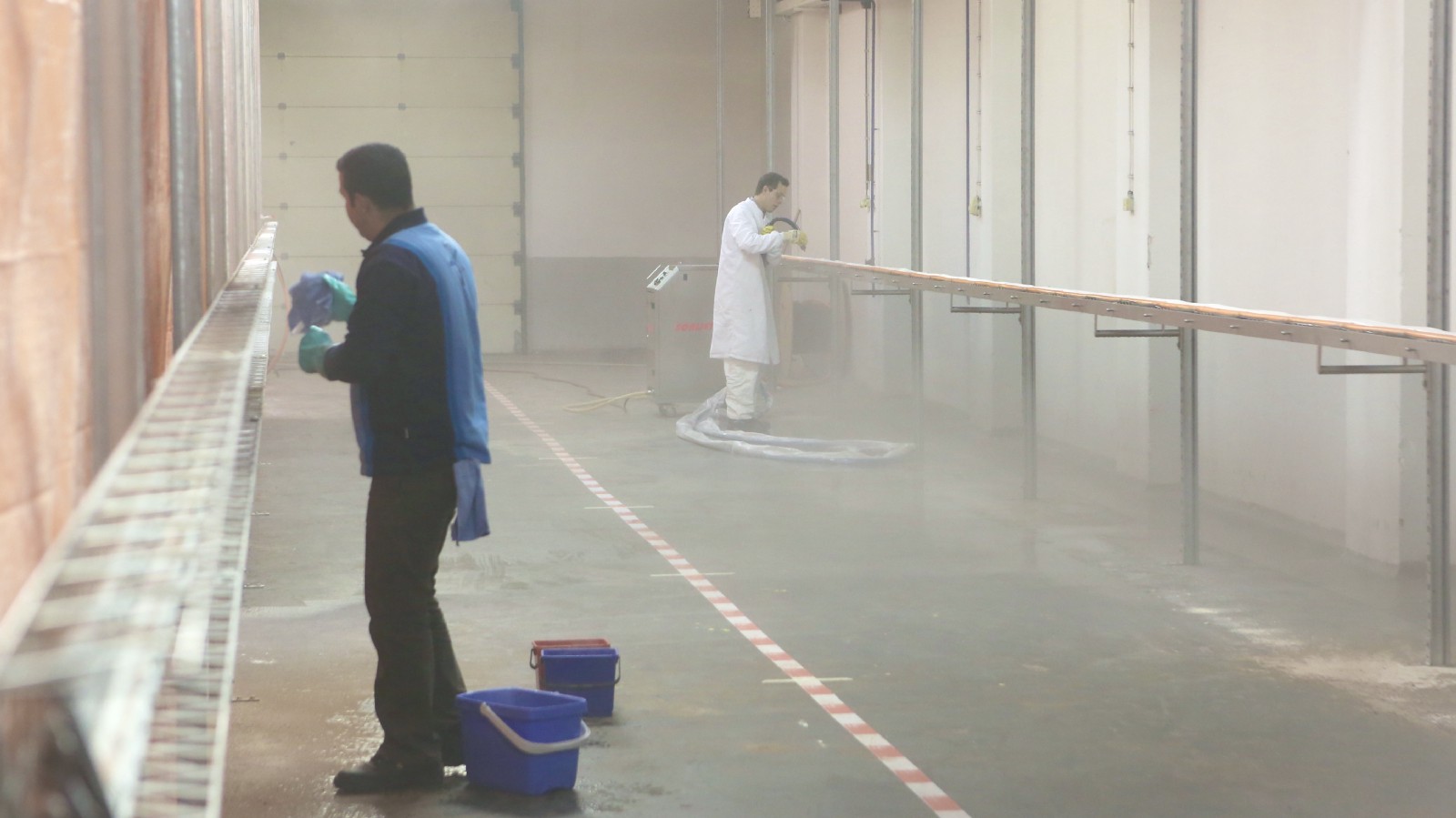
The results have been incorporated into the Practical Guideline for Hygienic Cabling.
